

Discovering Maye
A story about music passed between generations – how Latin pop’s rising songwriter kept the boleros for herself.


I never know when new music is going to move me. One day I just hear something that checks all the boxes, flows through every filter, and hits me in all the right places: the heart, the gut, the mind. That’s how I discovered Maye Osorio. I spend a lot of time in the car listening to music with my twelve-year-old son, Julian. Over the years I’ve transmitted everything he needs to hear in order to develop good taste in music – the generational exchange that is the responsibility of every parent. Now that he’s exploring music on his own with access to virtually every song ever recorded on streaming services, our drives together have become fascinating and enlightening musical journeys. He exposes me to music I would normally not have the opportunity to listen to. On one such occasion, Julian played me the latest addition to his My favs playlist, the outstanding song “See You Again (feat. Kali Uchis)” by Tyler, the Creator. It was the last track on his playlist so we decided to take a chance and let Spotify’s algorithm serve up the next few songs. It went something like this:
Ok!
Oh yeah?
Oh my.
Oh my god.
“There’s a transportive quality to these songs – the uplifting sounds and Maye’s vocal charm make her music so easy to love.”
I was immediately captivated by the sweet melodic intro of “Versos de Placer,” and completely struck by the drop and Maye’s silken and sultry voice. I had been exploring international artists for a retail music curation project (more on this in another story) and was listening to a lot of Spanish, French, and Italian music. During a deep dive later at home, my ears were primed to hear how Maye translates her Latin heritage into her songs. I adored how she embraced Brazilian bossa nova on songs like “Peter Pan” and Cuban bolero on “Tú” – effortlessly weaving different threads of Latin music through her singles. There’s a transportive quality to these songs – the uplifting sounds and Maye’s vocal charm make her music so easy to love.
Maye’s melodies are original yet familiar – sublimely crafted, and heartbreakingly beautiful. More than anything else, I discovered that Maye’s music is the perfect easy listening to deliver you from the noise, distractions, and nonsense of everyday life.
María Alejandra Osorio
Music is written into Maye’s DNA. She was born in Caracas in 1993 and raised in Miami – Venezuelan by birth, American by upbringing – the daughter of Latin Grammy-winning singer-songwriter Fernando Osorio. She started writing songs around the age of eight, at first only in English, but her father nudged her toward writing in Spanish. “My dad always told me, ‘Why don’t you write in Spanish?’ and I thought it was a nuisance,” she told Indie Rocks! in 2019. “In the end I realized it was a mistake, since I’m part of both.” Maye’s career had a quick trajectory, landing a Warner Chappell Music publishing deal after releasing her debut solo single “My Love” in March 2019. She followed with her second single “Tú” in September, which earned critical acclaim and massive online streaming success. She continued releasing a string of successful singles including “Descifrar” in early 2022. That same year she was invited to open for The Marías on their North American CINEMA tour – the same band that would ultimately lead me straight to her music four years later. To understand where Maye’s voice comes from, you have to meet her dad.


The inheritance of song
Fernando Osorio was born in Bogotá, Colombia, in 1964 and raised in Caracas. By age seven he had learned to play violin, viola, flute, and the cuatro – a four-string nylon instrument from the guitar family and the rhythmic core of Venezuelan folk music. In 1982 he met Juan Carlos Pérez in a church choir, and the two formed the pop duo Fernando y Juan Carlos. They recorded and released their charming debut album Uno, in 1985.
The album made the duo a minor pop phenomenon in Venezuela, and established their reputations as prominent pop singer-songwriters. Fernando’s breakthrough as a songwriter started in 1986, composing the song “Vamos a Dejarlo” for Ricardo Montaner’s self-titled album, which reached number one on the Billboard Latin Pop Albums chart. Two years later he wrote the hit “Sólo Con Un Beso” for Montaner’s second album, Ricardo Montaner 2, which peaked at number seven on the Billboard Hot Latin Songs chart.
By 1997, Fernando had topped the charts with two songs – first with “Lloraré” written for Puerto Rican singer Jerry Rivera, reaching number one on Billboard Latin Tropical Airplay, and “Moja Mi Corazón” for Spanish pop singer Marta Sánchez, hitting number one on Billboard Latin Pop Airplay. Then in 2001, Fernando was enlisted by producer Sergio George to help reinvent the late career of the Queen of Salsa, Celia Cruz. Together they wrote “La Negra Tiene Tumbao” for Cruz’s fifty-ninth studio album. The song was nominated for Record and Song of the Year at the 2002 Latin Grammy Awards. Finally, in 2003 Fernando and George co-wrote the last song Celia Cruz recorded before her death. “Ríe y Llora” was featured on her final album Regalo del Alma, topped the Billboard Tropical Songs chart for eleven weeks, and won the pair a 2004 Latin Grammy Award for Best Tropical Song.
By this time, Fernando had a ten-year-old Maye at home playing and writing music. “My earliest memories are of him singing to me,” she told Rolling Stone. Over the years he helped her start a professional music career, and around 2019 wrote a bolero for her. Interviewed by fellow musician Omar Apollo for Ladygunn in 2021, she recalled that her dad “tried to write a song pretending he was me, and he showed me the chords and I wrote the lyrics. Boleros have always been a personal thing for me and I’m happy it worked out.” The song “Tú” was her breakout hit – a year later it turned up on Barack Obama’s summer playlist.
That inheritance was on full display when she was invited to perform an NPR Tiny Desk Concert to celebrate Hispanic Heritage Month in September 2021. Staged inside her favorite Venezuelan restaurant in Miami, the performance is built on family and friends – her sister Ana play percussion and singing backing vocals, and her dad sitting in on the cuatro, the folk instrument from his own childhood.
Before she was Maye
Before she started her solo artist career as “Maye,” she followed her dad into the family trade of writing songs for other people – inheriting not just his music, but his profession. In 2017, Maye started writing for the likes of Colombian singer-songwriter Juan Pablo Vega, Colombian singer Fonseca, Spanish pop star Aitana, Venezuelan singer and producer Danny Ocean, Peruvian-American actress and musician Isabela Merced and Leslie Grace – a solid run of success with rising Latinx pop voices, and becoming the go-to pen for the women of her generation.
Highlights from her early songwriting years:
Juan Pablo Vega “Las Olas” single (2017) – a warm, acoustic tropical tune blending samba and calypso.
Aitana “Nada Sale Mal” from the album Spoiler (2019) – an energetic, contemporary pop song.
Danny Ocean “Dime Tú” from the Venequia album (2019) – a percussive Latin pop song co-written with Maye’s father.
Leslie Grace “Bachatica” single (2021) – a fusion of syncopated Dominican bachata with a trap-inspired beat.
For these early co-written songs, Maye put herself in the shoes of each performer, delivering something that matched their genre and cultural heritage. As she told Ladygunn, “Sometimes for other people I tap into different characters or experiences.” She can write in anyone’s voice, but there was one thing she didn’t give away – the boleros, her own heritage and the thing that sets her music apart.
bolero noun
bo-ˈle-rō
: a music genre that originated in eastern Cuba in the late nineteenth century – characterized by sophisticated lyrics dealing with love, it has been called the “quintessential Latin American romantic song of the twentieth century.”
Hers from the start
From her earliest singles under her own name, the sound Maye kept for herself was bolero. “I’ve always loved listening to Los Panchos or Celia Cruz’s album Boleros,” she told SPIN in 2025. “I always got this nostalgic feeling from that time when I heard them. I grew up with them and wanted to make them my own.” And like a ghost from the past, Celia Cruz re-enters the room, tying together these two threads – Maye’s teenage bolero obsession and her father writing Celia’s last recorded song. Which brings us back to “Tú,” Maye’s breakout single. This is the song her father co-wrote “pretending he was me,” the song that Maye described to Rolling Stone as “a tribute to all old boleros.” The bolero – the yearning torch song driven by bongos and acoustic guitar – runs through Maye’s singles all the way up to her 2025 debut album Música Para Abrir El Cielo.


Maye’s signature move was reinventing bolero. These songs were never for sale – they were hers from the start.
Full circle
Maye has built her career inside the Venezuelan diaspora and the music community that runs through Miami. Writing songs for Venezuelan artists, guesting on tracks by others, staging her NPR Tiny Desk at her favorite Venezuelan restaurant, La Latina – she has put her heritage front and center, building a community and a career on her roots. As she prepared to embark on her debut headline Música Para Abrir El Cielo Tour – 18 U.S. cities over the summer of 2025 – she enlisted the perfect opening act: her dad. Fernando Osorio walking on stage with an acoustic guitar to play his hits before his daughter played the boleros she’d made her own.
I look back at my own discovery of Maye and can’t help but smile. My son Julian’s playlist opened the door and handed her to me. Now I’m passing her on to you. I hope her music moves you too.
Here’s a concert film from Maye’s headline show at the El Rey Theatre in Los Angeles on August 2, 2025.
Discover Maye
There’s a common vibe across her songs, but each is its own sonic landscape – new voices, textures, and emotions that make the listening engaging. For this playlist I’ve hand-picked 12 songs spanning her career so far.
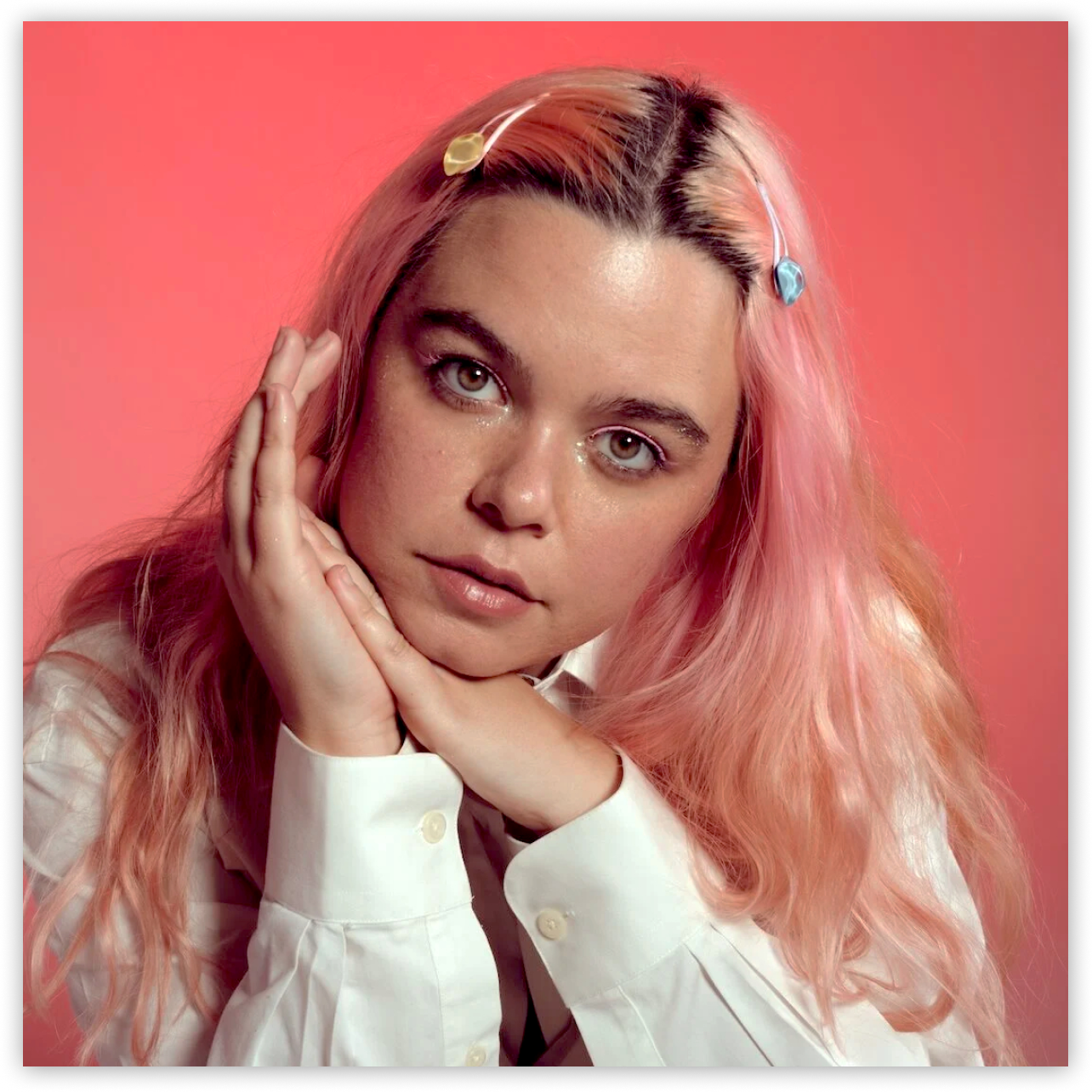
Liner Notes.
Six highlights I keep coming back to.

“Favorite Place”
An airy pop song built on melancholic synths and a tender vocal, every instrument played with a delicate touch. The lo-fi lead guitar throughout is entrancing.

“Tú”
The way this song builds is brilliant. A slide guitar lead, bass, and vibraphone meet bolero percussion and Maye’s subdued vocal, making room for the chorus to breathe. Each verse adds another layer. A perfect pop song.

“Yours”
An ’80s-inspired, synth-laden groove. The melodies in this one make me melt – my favorite song she’s released.

“Peter Pan”
Built almost entirely on acoustic instruments and percussion, this one hits more Latin notes than anything else in her catalog, right down to the classic trumpet section.

“Luna de Miel”
Warm and hazy late-night vibes – the blend of synth pads and percussion is sublime. It’s the soundtrack to a dream.
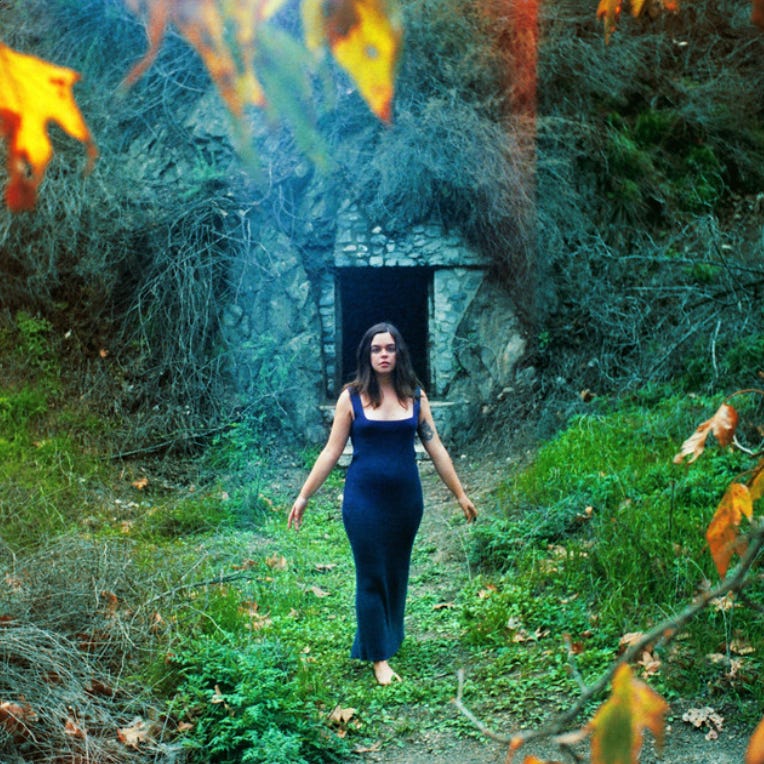
“Kaleidoscope”
Bare and intimate, with experimental percussion and electronics balanced against soft synths and tremolo guitar. Maye strips everything away and loses nothing.